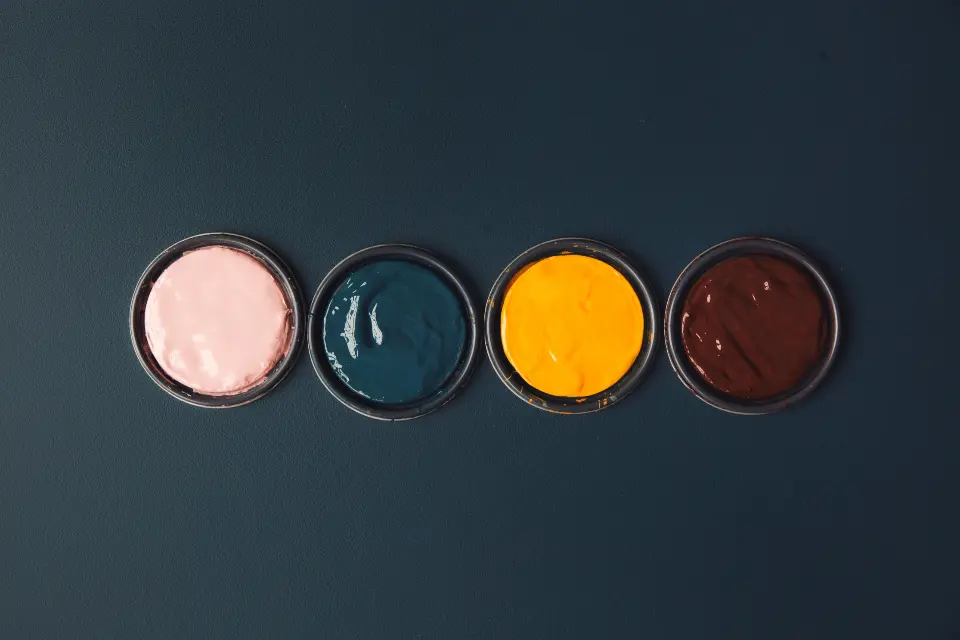
The palette
#2F5D5A
#22314A
#7C8A68
#B4552E
#D8CBB4
Choosing a cupboard colour
Start with what will not change: the worktop, the floor and the light. A north-facing kitchen makes cool greys look grim, so lean into warmth — putty, mushroom, a soft ochre or a green with yellow in it. South-facing rooms can carry cooler blues and blue-greens without feeling chilly.
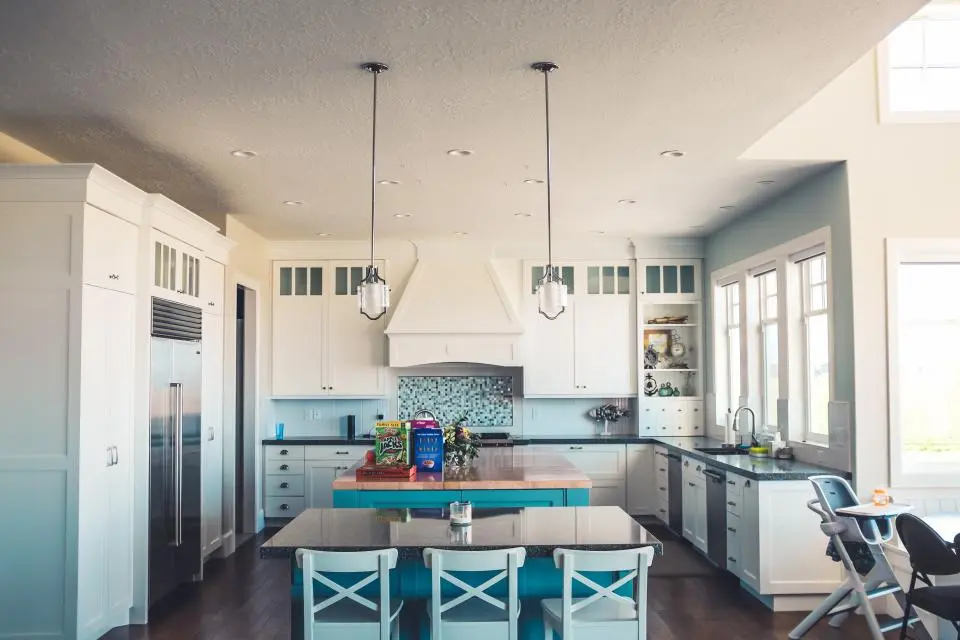
Dark cupboards — navy, bottle green, aubergine, near-black — read as furniture rather than fitted units, and they hide the scuffs that come with daily use. If the room is small, paint the base units dark and the wall units (or open shelving) the same colour as the walls so the top half of the room recedes.
Don't forget the inside. A drawer or glazed dresser painted a contrasting shade — terracotta inside a sage dresser, say — is a small, joyful surprise every time it opens.
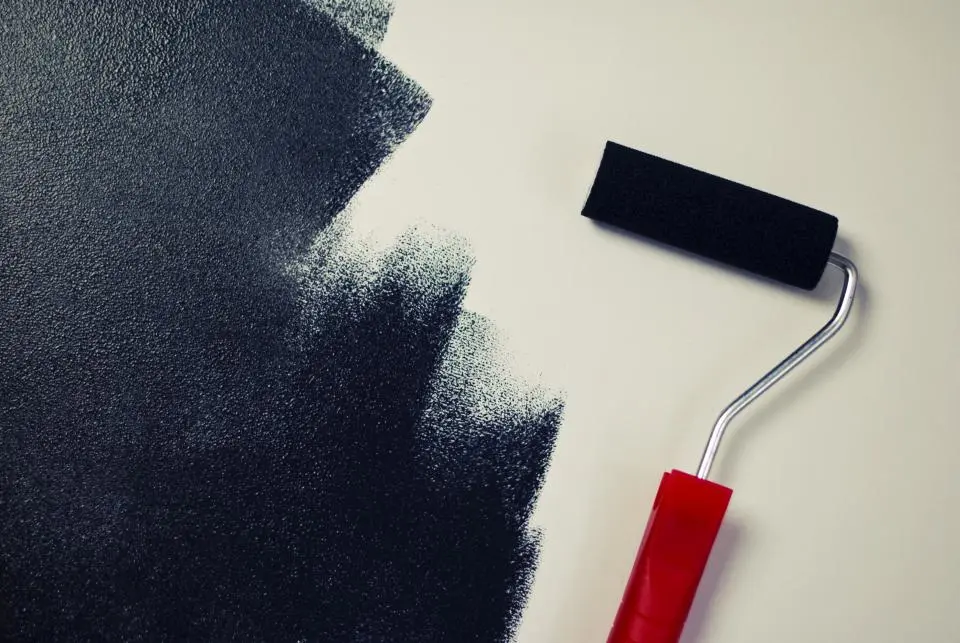
Rolling a dark paint colour onto a smooth, primed surface.
What paint to use
Kitchen doors take more knocks than any other painted surface in the house, so standard wall emulsion will not do. Use a dedicated cupboard or furniture paint, or a water-based eggshell for wood and MDF. Modern water-based formulas level well, dry quickly, don't yellow and clean up with water.
- Eggshell — the classic choice: a low sheen that is wipeable but still looks soft.
- Satin — slightly more sheen and a touch tougher; good for family kitchens.
- Matt or chalky finishes — beautiful but more porous; only use them with a protective top coat.
Laminate, vinyl-wrap and high-gloss doors need a specialist bonding primer first, otherwise even the best top coat will peel.
How to paint cabinets like a professional
- Remove doors, drawers and hardware. Number each door and its hinge position with masking tape. Painting doors flat avoids drips.
- Degrease. Kitchen surfaces carry a film of cooking grease that ruins adhesion. Wash with sugar soap, rinse with clean water and let everything dry fully.
- Key the surface. Sand lightly with 180–240 grit paper — you are scuffing the surface, not stripping it. Vacuum and wipe with a tack cloth.
- Fill and prime. Fill dents, sand smooth, then apply a primer suited to the substrate (bonding primer for laminate, stain-blocking primer for knotty or tannin-rich timber).
- Two thin top coats. Use a quality synthetic brush for mouldings and a small mohair or foam roller for flat panels. Lay off each panel in one direction. Thin coats are what make it look sprayed.
- Be patient. Paint is touch-dry in hours but takes one to two weeks to cure to full hardness. Rehang carefully and treat the doors gently for the first fortnight.
The finish is decided in the preparation. Most of a professional painter's time is spent before the lid is off the tin.
Finishing touches
New handles change the character of a kitchen as much as the paint. Unlacquered brass will age beautifully against greens and blues; aged bronze or blackened steel suits pale, earthy colours. Line up the old screw holes — or fill and re-drill if you are changing size — before the top coats go on.
Finally, think about the walls and ceiling as part of the scheme. A cupboard colour repeated, a few shades lighter, on the ceiling ties the whole room together.
Frequently asked questions
Do I need to sand kitchen cupboards before painting?
Yes — a light scuff-sand gives the primer something to grip. You don't need to take them back to bare wood.
How long does painted kitchen cabinetry last?
With proper preparation, primer and a cupboard-grade paint, a painted kitchen can last many years, and a single door can be touched up easily.
Can you paint laminate kitchen doors?
Yes, but they must be degreased, lightly sanded and coated with a bonding primer designed for laminate before the top coat.