The palette
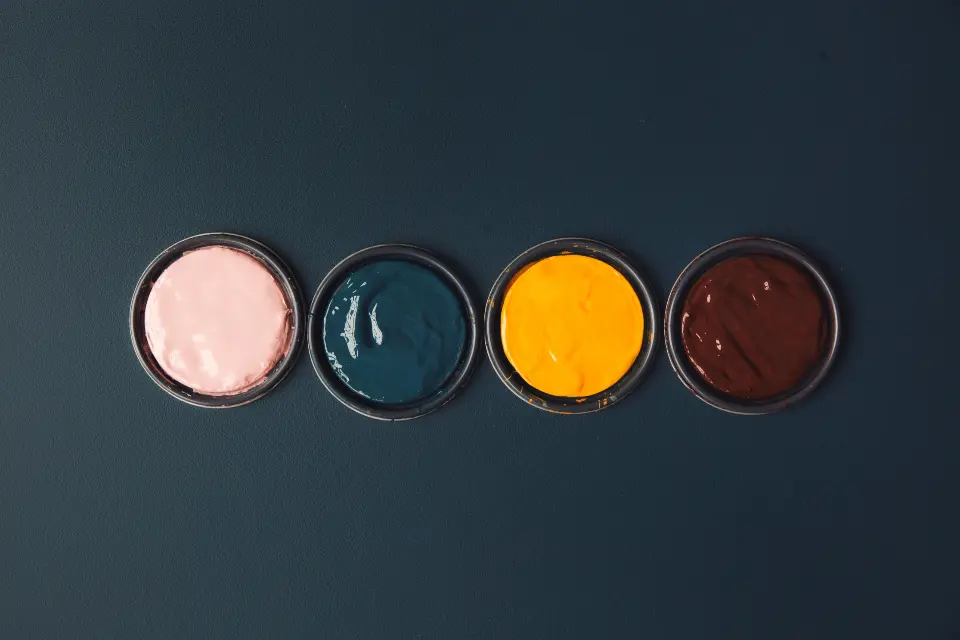
#B4552E
#C8952C
#7C8A68
#22314A
#D9CDB8
Which wall to choose
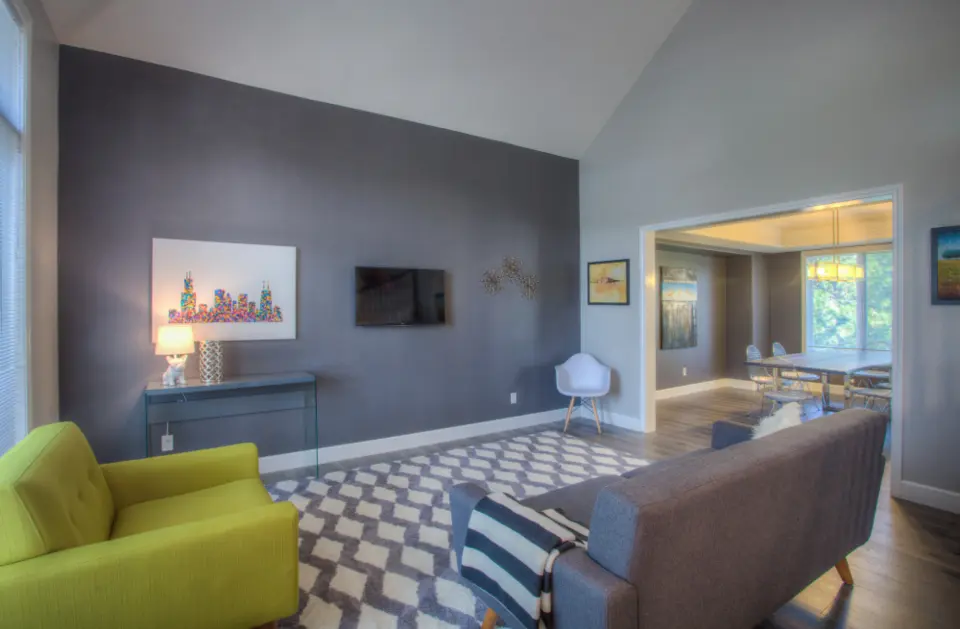
Choose the wall the eye naturally lands on: behind the bed, behind the sofa, the chimney breast, or the wall you face when you walk in. Avoid walls broken up by several doors or windows — the effect gets lost.
In open-plan spaces, a feature wall can define a zone: a colour block behind a dining table, or panelling behind a reading chair.
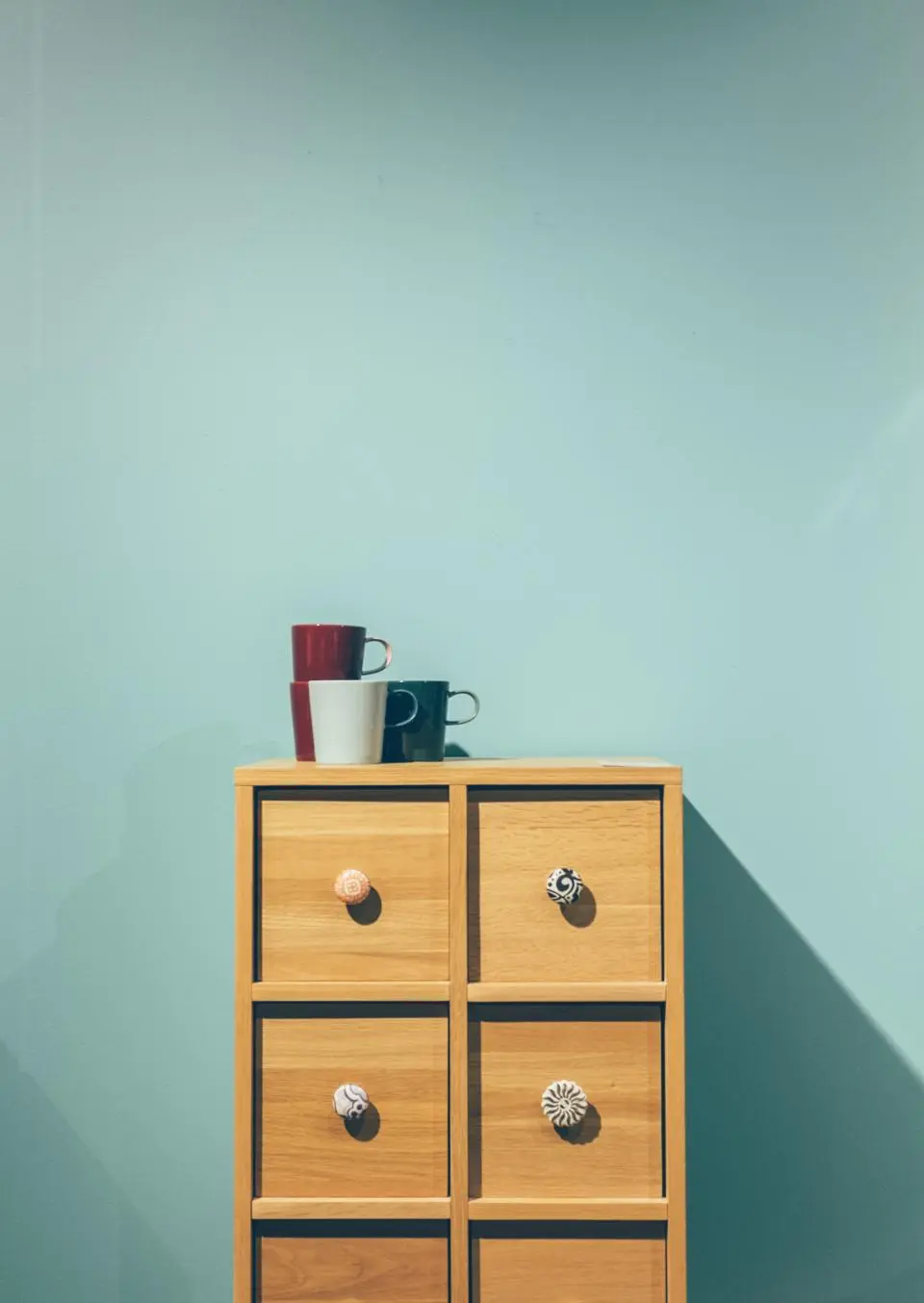
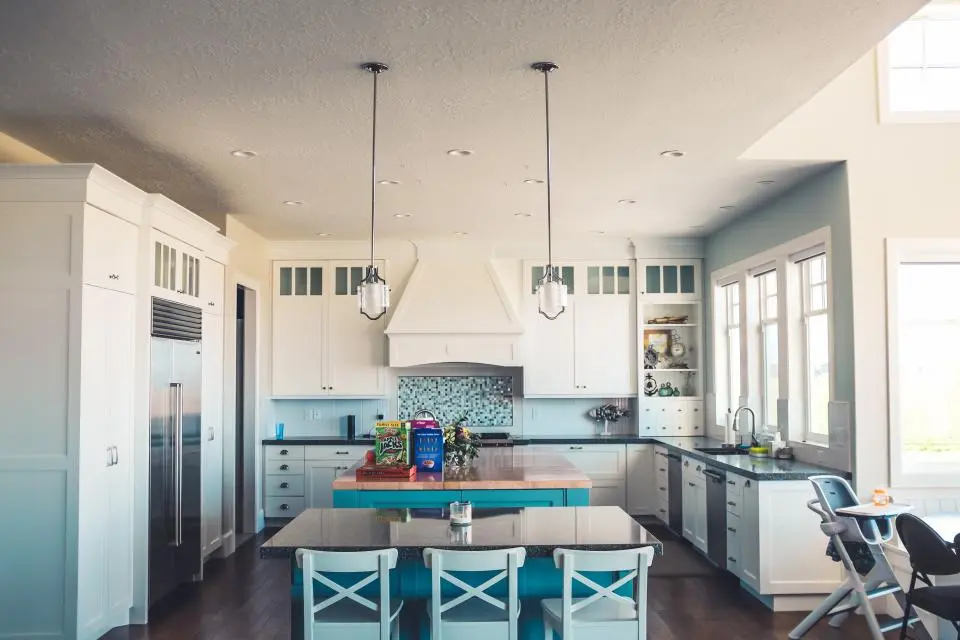
A single wall of soft teal turns a simple chest of drawers into a vignette.
Feature wall ideas for living rooms
- The chimney breast — paint it a deeper shade of the main wall colour, or paper it in a bold print.
- Shelving walls — paint the back of built-in alcove shelves a contrasting colour so books and objects pop.
- Panelling — simple batten panelling or a picture-frame moulding adds depth even in white.
- Limewash or plaster finishes — soft, cloudy texture that changes with the light.
Feature wall ideas for bedrooms
Behind the bed is the obvious and best place. Try a painted headboard — a rectangle, arch or half-circle of colour behind the bed — for a graphic look that costs very little. A mural or scenic wallpaper creates the feeling of a view, and fabric-covered or upholstered walls add softness and quiet.
Making it look intentional
A feature wall jars when it has nothing to do with the rest of the room. Repeat its colour at least twice elsewhere — a cushion, a lampshade, a picture frame, the inside of a bookcase. Continue the colour across the skirting and woodwork on that wall so it reads as one plane.
One brave wall, echoed three times, makes a whole room feel designed.
And consider going beyond the single wall: colour blocking the lower half of all four walls, or painting the ceiling to match the feature wall, can create a more modern, wraparound effect.
Frequently asked questions
Are feature walls still in style?
Yes — but today's feature walls are subtler and more architectural: painted arches, panelling, colour-drenched alcoves and textured plaster rather than a single loud wallpaper.
Should a feature wall be darker or lighter?
Usually darker or more saturated than the other walls, so it draws the eye and adds depth.
Which wall should be the feature wall in a bedroom?
The wall behind the bed headboard, as it frames the bed and is what you see on entering the room.